
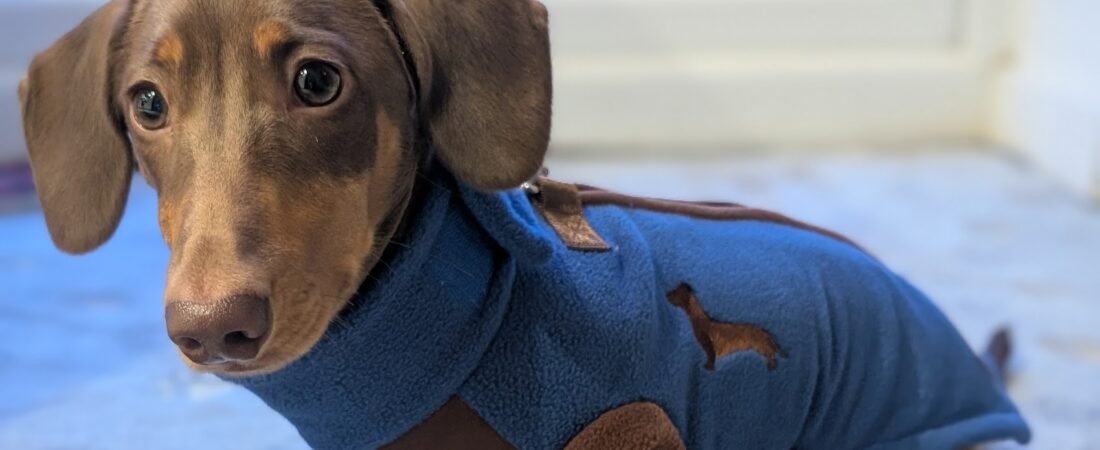
If you own a dachshund, you’ve probably heard the same advice over and over again:
“Don’t let them jump.”
And honestly, once you have a dachshund in your life, you quickly realise why people say it so much.
Their long little bodies, short legs and huge personalities are exactly what make them so special, but it also means we have to think a bit differently about everyday life.
Before Winston came home, we knew dachshunds could be prone to back problems, but it wasn’t until we started preparing for him properly that we realised how many small things around the house could make a difference.
Things like:
- how they get on and off the sofa
- how you lift them
- whether they’re allowed to jump
- what harness they wear
- how much exercise they get
- whether they’re carrying extra weight
None of these things can guarantee your dachshund will never have back problems, but they can all help reduce unnecessary strain.
This guide isn’t veterinary advice, and if you’re ever worried about your dachshund’s back, movement or behaviour, it’s always best to speak to your vet. But these are the simple, everyday things we do with Winston to try and look after his long little back as much as we can.
Why Dachshunds Need a Bit of Extra Care
Dachshunds were bred with long bodies and short legs, which is part of what makes them so adorable.
But that body shape also means their spine needs a little extra thought.
One of the main conditions dachshund owners hear about is IVDD, which stands for Intervertebral Disc Disease. It affects the discs between the bones of the spine and can cause anything from pain and stiffness to weakness, wobbliness or more serious mobility problems.
That sounds scary, and we know it can be a worrying topic.
But our approach with Winston has always been this:
We don’t want to wrap him in cotton wool.
We just want to make sensible choices that reduce avoidable strain where we can.
He still runs, plays, sniffs, explores, digs and gets up to all the usual dachshund mischief. We just try to make his home setup and lifestyle as back-friendly as possible.
1. Set Boundaries Around Jumping Early
This has probably been one of the biggest things for us.
From the beginning, we’ve been really careful not to let Winston jump on or off things.
That means no launching himself off the sofa, no jumping off chairs, no jumping down from raised surfaces and no “just this once” moments if we can help it.
It might sound strict, but setting the boundary early has made it much easier because it’s simply become part of his routine.
He doesn’t expect to be able to jump off furniture because we’ve never encouraged it.
Of course, no one is perfect and dogs are quick little creatures when they want to be! But the more consistent you are, the more normal it becomes for them.
For us, the rule is simple:
If Winston can’t get down safely using a ramp or steps, we lift him.
2. Use Ramps or Steps Where They Make Sense
Ramps and steps have been one of the easiest changes for us.
We use them in the places Winston needs help most often, especially for the sofa and our kitchen/garden door.
For our kitchen and garden door, we use a sturdy outdoor kerb ramp because the step is quite steep. It isn’t technically a dog ramp, but it works really well for our setup because it’s heavy, stable and suitable for all weather.
For the sofa, we use foam-style steps so Winston has a clear way up and down without jumping.
Every home will be different, so it’s not about copying exactly what we do. It’s about looking at where your dachshund is most likely to jump and finding a safer option for that space.
Common places to think about are:
- sofas
- beds
- garden steps
- kitchen doors
- patios
- cars
- raised chairs
- campervans or caravans
We don’t let Winston on our bed, so we’ve never needed a bed ramp. But if your dachshund does sleep on the bed, a proper bedside ramp could be a really sensible option.
The main thing is choosing something stable, grippy and not too steep.
If it wobbles or feels unsafe, most dachshunds will either refuse to use it or try to leap over it entirely — which slightly defeats the point!
3. Lift Your Dachshund Properly
This is such a simple thing, but it really matters.
Because dachshunds have long backs, they need proper support when you pick them up.
We always try to support Winston at both ends — one hand under his chest/front end and one hand supporting his back end.
The aim is to keep his body as level and supported as possible rather than letting his back end dangle.
It’s also worth making sure everyone in the house knows how to lift your dachshund properly.
That includes family, friends and anyone who might look after them.
A dachshund might be small, but they shouldn’t be scooped up like a handbag!
4. Keep Them at a Healthy Weight
This is one of those topics that can feel a bit boring, but it’s so important.
Extra weight means extra pressure on their joints, legs and spine.
With dachshunds, even a small amount of extra weight can make a difference because they’re already carrying themselves on such little legs.
We try to keep an eye on Winston’s body shape rather than just focusing on the number on the scales.
You should usually be able to feel their ribs without having to press too hard, and they should have a visible waist when viewed from above.
If you’re not sure whether your dachshund is a healthy weight, your vet will be able to check their body condition and tell you what’s right for them.
And yes, we know dachshunds are very good at looking starving even when they have absolutely eaten.
Winston would happily convince the entire household that he has never been fed in his life.
5. Use a Well-Fitted Harness
For walks, we much prefer a harness over attaching a lead to a collar.
A good harness helps spread pressure more evenly across the body, rather than putting strain through the neck.
But the fit really matters.
A dachshund-friendly harness should allow them to move properly without rubbing, restricting their shoulders or sitting awkwardly on their long body.
Things we’d look for include:
- a secure fit
- no rubbing under the front legs
- enough adjustment around the chest
- comfortable padding
- freedom of movement
- a shape that suits a longer body
This is actually one of the reasons we became so interested in dachshund-specific products in the first place.
So many dog products are made for “small dogs” generally, but dachshunds aren’t shaped like most small dogs.
They need things that work with their body, not against it.
6. Keep Exercise Regular but Sensible
We don’t believe dachshunds should be treated like they’re fragile little ornaments.
They still need proper exercise, mental stimulation and time to be dogs.
Winston loves a good sniff, a little adventure and a chance to explore.
The key for us is keeping exercise regular and controlled rather than suddenly doing too much.
Shorter, consistent walks are usually better than doing very little all week and then expecting them to manage a huge walk at the weekend.
We also love enclosed dog paddocks because they give Winston space to practice recall and explore safely without the same pressure as busy public spaces.
For dachshunds, exercise isn’t just about tiring them out physically.
It’s also about letting them sniff, think, investigate and use their little brains.
A mentally satisfied dachshund is usually a much happier dachshund.
7. Make Your Home Easier for Them to Move Around
Once you start looking at your home from a dachshund’s point of view, you notice all sorts of things.
Slippery floors, steep steps, high sofas, awkward doorways and tempting furniture can all create moments where they might jump, slip or twist.
You don’t need to redesign your whole house.
Just look for the main areas where your dog might struggle.
Useful changes can include:
- using ramps or steps for furniture
- adding mats or rugs to slippery floors
- blocking access to unsafe stairs or high furniture
- keeping their bed somewhere easy to reach
- making sure garden access is safe
- giving them a clear route in and out of rooms
We’ve found that if the safe option is easy and obvious, Winston is much more likely to use it.
If the ramp is in the wrong place, too steep or awkward, he’ll look for another way.
Usually the most dramatic way possible.
8. Be Careful with Stairs
Stairs can be a tricky topic because every home and every dog is different.
Some dachshunds manage stairs calmly and carefully, while others treat them like an Olympic sport.
For us, the main concern is uncontrolled movement — rushing, slipping, jumping down the last few steps or twisting awkwardly.
If you do allow your dachshund to use stairs, it’s worth encouraging them to go slowly and calmly.
For puppies, older dogs or dogs with any back concerns, we’d always be extra cautious and speak to a vet if unsure.
We don’t think the answer is to make every dachshund scared of stairs.
But we do think it’s sensible to avoid repeated, high-speed stair zoomies where possible.
Because let’s be honest, dachshunds are not always known for making sensible life choices.
9. Watch for Changes in Movement or Behaviour
One of the most important things you can do is simply know what’s normal for your dog.
You know how they walk, how they sit, how they play and how they behave when they’re happy.
So if something suddenly seems “off”, trust your gut.
Signs that would make us contact a vet include:
- yelping or crying when picked up
- seeming stiff or hunched
- not wanting to walk
- wobbliness
- weakness in the back legs
- dragging paws
- struggling to get up
- sudden reluctance to jump, climb or move
- shaking, hiding or acting unusually quiet
- loss of bladder or bowel control
Some of these signs can be linked to serious back problems and should be taken seriously.
If we were ever worried about Winston’s back, we wouldn’t wait to see if it improved over several days. We’d contact the vet and get proper advice.
With dachshunds, it’s always better to be cautious.
10. Don’t Panic — Just Be Prepared
It’s very easy to read about IVDD and scare yourself.
We’ve been there.
But living with a dachshund shouldn’t feel like you’re constantly waiting for something bad to happen.
The aim isn’t to panic.
The aim is to be prepared.
That means making small, sensible choices every day:
- use ramps where needed
- avoid unnecessary jumping
- lift them properly
- keep them at a healthy weight
- use a good harness
- keep them active but not overdone
- know the warning signs
- speak to your vet if something doesn’t feel right
None of this takes away from the joy of having a dachshund.
If anything, it helps you enjoy them more because you know you’re doing your best for them.
What We Do with Winston
For Winston, our everyday back-care routine is pretty simple.
We don’t let him jump off furniture.
We use steps for the sofa.
We use a sturdy ramp for the kitchen/garden step.
We lift him properly when he needs help.
We keep an eye on his weight.
We use a harness for walks.
We give him regular, sensible exercise.
And most importantly, we try to be consistent.
He’s still a cheeky, curious, mischievous little dachshund. He still has big opinions, does dramatic sighs and acts like every chew is the best thing that has ever happened to him.
We’re not trying to stop him being Winston.
We’re just trying to make his world a little safer for his long little back.
Final Thoughts
Protecting your dachshund’s back doesn’t have to mean changing everything overnight.
Start with the obvious things.
Where do they jump most?
Where do they slip?
Where do they need help?
Where could a ramp, steps, rug or small routine change make life easier?
For us, the biggest difference has been setting boundaries early and making safe options part of Winston’s normal day.
We can’t control everything, and we can’t make promises about the future.
But we can do our best.
And when it comes to these funny, stubborn, loyal little dogs, doing our best is exactly what they deserve.
At Dax & Hound Co., everything we share comes from life with Winston and the things we’re learning along the way. We’re not vets — just dachshund owners who care deeply about helping our little long-backed friends live happy, comfortable lives.
Related Guides
- Best Ramps for Dachshunds: What We Use with Winston & Other Great Options
- How to Lift a Dachshund Properly
- Best Harnesses for Dachshunds
- How to Train a Dachshund Not to Jump
- Dachshund Puppy Essentials Checklist


Leave a Reply