
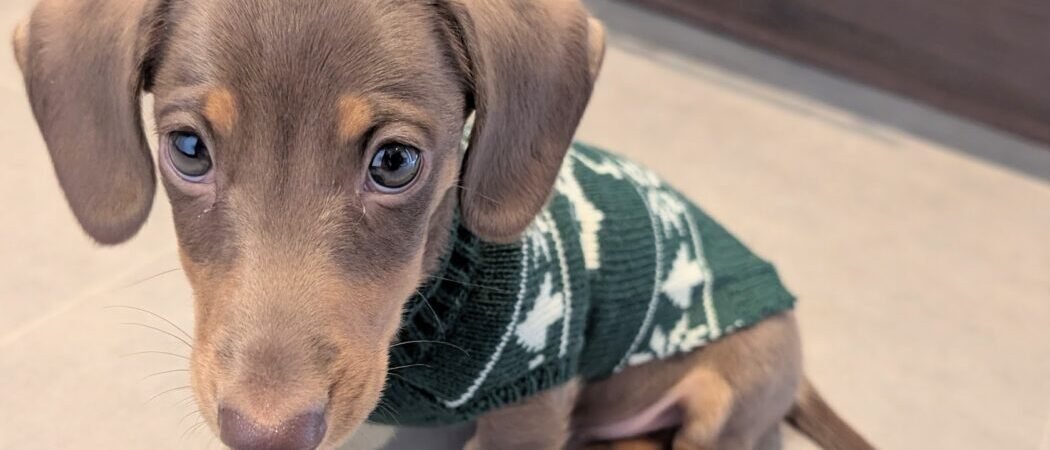
Quick answer: Before getting a dachshund puppy, we wish we had fully understood just how tiring, intense and life-changing the first few weeks would be. We had the crate, the puppy pen, the ramps, the gates, the food, the toys and the research — but nothing quite prepared us for the constant watching, toilet training, broken sleep, shark mode, separation training and emotional overwhelm. It was absolutely worth it, but it took more time, patience and consistency than we expected.
Before Winston came home, we thought we were prepared.
And in some ways, we were.
We had done the research.
We knew dachshunds needed extra care with their backs.
We had ramps ready.
We had baby gates.
We had a crate and pen setup.
We had food, bowls, toys, bedding, puppy pads, a puppy camera, training treats, insurance and probably far too many conversations about whether we had remembered everything.
But there is a big difference between being prepared with the stuff and being prepared for the reality.
Because then Winston came home.
Tiny Winston.
So small that when he went out into the garden, we were genuinely worried a seagull might swoop down and carry him off.
And suddenly, our normal life completely changed.
Our routine disappeared overnight.
We had very little time for ourselves.
We were tired in a way we had not expected.
And, if I am being completely honest, there were moments in those first few weeks where we both looked at each other and thought:
“Have we made a mistake?”
That feels awful to admit now, because Winston is our world.
We could not imagine life without him.
But I think it is important to say it, because puppy life can be overwhelming even when you love them, even when you planned for them, and even when they are exactly what you wanted.
So this is the article we probably needed before bringing Winston home.
Not to scare anyone.
Not to put anyone off dachshunds.
But to be honest about what we wish we had known.
Because dachshund puppies are adorable, clever, loving, ridiculous little sausages.
But my goodness, they are also a lot.
This post may contain affiliate links. If you buy through one of our links, we may earn a small commission at no extra cost to you.
1. We Wish We Knew How Tiring It Would Be
We knew getting a puppy would be hard.
Everyone tells you that.
But we were not fully prepared for how physically, mentally and emotionally exhausting it would be.
The hardest part was not one single thing.
It was the constant watching.
Watching for toilet signs.
Watching for chewing.
Watching for jumping.
Watching for tiredness.
Watching for overexcitement.
Watching him on the puppy camera even when he was asleep, just in case.
Even when we had a quiet moment, we were not properly switching off. If Winston was napping, we were checking the camera. If he was awake, we were watching what he was doing. If he looked even slightly suspicious, we were ready to scoop him up and rush outside.
Looking back, we probably put a lot of pressure on ourselves.
But I also think that constant effort paid off.
Because Winston became a well-trained, well-mannered, settled little dog. And I do not think that happened by accident.
It came from those tiring early weeks where we were very consistent.
Very tired.
But very consistent.
2. Toilet Training Felt Like a Full-Time Job
This is probably one of the biggest things we wish we had truly understood.
Toilet training was constant.
Winston was tiny, and his bladder was tiny too. He could only hold himself for very short periods, so we put the responsibility on ourselves to give him as many chances as possible to get it right.
In the day, that meant taking him out:
- every 20 to 30 minutes
- after every nap
- after every meal
- after every drink
- after every play session
- after training
- before bed
- during the night
- anytime he looked even slightly like he might be about to wee
His main sign was circling while sniffing.
Once we learnt that, we knew we had a very small window to get him outside.
And when I say small window, I mean tiny.
The first day did not exactly go to plan either.
When we brought Winston home, there was a storm. Our plan had always been to start toilet training immediately, but after about five minutes in the garden with this tiny puppy, horrible rain and an umbrella that seemed determined to fly away, we gave in and restarted properly the next day.
Then it rained for about two months.
Every day.
That is the UK for you.
It made toilet training pretty miserable at times, but there was one unexpected benefit: Winston got very used to rain, being dried off, having his paws touched and being towelled down.
So at least something good came from the endless wet puppy phase.
3. Washable Puppy Pads Were Better Than Disposable Ones
We used puppy pads, but if we were doing it again, I would lean much more towards washable ones.
The disposable pads did not last long with Winston.
One moment that is still burned into my memory is coming downstairs to find that Winston had actually done really well and aimed perfectly on the puppy pad.
Unfortunately, he was then so pleased with himself that he ran over and enthusiastically started digging at the pad.
Poo and all.
One smelly bath later, we decided disposable pads were not for us.
The washable pads were much better.
They stayed in place more easily, felt less tempting to destroy, and were more useful as part of his pen setup.
Not glamorous.
Very practical.
Welcome to puppy life.
4. Time Off Work Helped More Than We Expected
Between us, we had about a month off work when Winston came home.
Two weeks each.
And honestly, I do not think we could have managed the level of training we did without it.
It was still intense.
It was still tiring.
But it meant we could be consistent from day one.
By around two months in, Winston was toilet trained, crate trained, following important commands like settle, wait and break, and already on his way with recall.
For a miniature dachshund, we were really proud of that.
Not because he was perfect.
He was still a puppy.
But because the time, effort and routine had clearly helped.
If you are bringing home a dachshund puppy, I would strongly recommend planning time off if you possibly can.
They have just left their mum, littermates, familiar smells and everything they know.
They need stability.
They need reassurance.
They need to bond with you.
And they need to learn that you always come back.
That does not happen instantly.
5. Crate Training May Need Adapting
We were confident about crate training before Winston came home.
And overall, it went well.
But the setup did change.
At first, we had his crate with a pen area around it, and we closed him in the crate when he was napping.
But we quickly realised that because his bladder was so tiny and he needed to wee so often, it made more sense to leave the crate open into his pen. The pen had washable mats and a corner with a washable puppy pad.
That worked better for him.
He still had the crate as his cosy sleep space, but he also had a little more freedom and a backup toilet area if we did not get there quickly enough.
We also found that feeding Winston his meals in the crate helped massively.
Breakfast, lunch and dinner all became positive crate moments. It did not take long before he was running into his crate when he knew food was coming.
That was exactly the association we wanted.
The crate was not where fun stopped.
It was where food happened.
Where sleep happened.
Where comfort happened.
Where his familiar-smelling jumper was.
If Winston fell asleep in his pen, on the sofa, or on one of our laps, we would gently move him into the crate so he could carry on sleeping there. Over time, he started choosing to go in and sleep there himself.
By the end of the first week, the crate already felt like part of his normal routine.
And that, to me, is what crate training should be.
A crate should be somewhere a dog feels safe and relaxed.
Not somewhere used as punishment.
There should be no more guilt in giving a puppy a safe sleep space than there is in giving a toddler a bedtime.
6. The Jumper Was Worth It
Before Winston came home, we sent a jumper to the breeder so it would smell like us and the place he was coming from.
I would absolutely do that again.
Winston loved it.
It gave him something familiar during those first strange days in a new home.
And later, after night-time toilet trips, we would sometimes pop it in the tumble dryer very briefly so it was warm, then put it back in his crate.
He came to expect it.
He would burrow into it and settle back down much faster.
It sounds like such a small thing, but when you are exhausted and your tiny puppy settles because of a warm, familiar-smelling jumper, it feels like magic.
7. Puppy “Shark Mode” Does Not Always Mean More Play
Winston’s puppy biting was one of the things we had to learn quickly.
There is advice everywhere online that says to make an “ouch” sound if a puppy bites.
That may work for some dogs.
For Winston, it had the opposite effect.
It seemed to activate his prey drive and made him more excited.
What worked better for us was either redirecting him to a toy or chew, or removing ourselves so he learnt that biting made attention stop.
At first, we thought his wild moments meant he needed more tiring out.
Then we realised the opposite was often true.
He was overtired.
A bit like a toddler having a tantrum.
When Winston hit shark mode, he would get nippy, chew his bed, and do crazy zoomies around the house.
The best thing we found was not more play.
It was calm space, supervision from the puppy camera, and letting him sleep.
Usually, he would fall asleep quickly once left to reset.
That was a big lesson.
Sometimes the puppy does not need more excitement.
Sometimes the puppy needs a nap.
8. Dachshunds Are Cleverer Than You Expect
We expected Winston to be clever.
But he was even smarter than we thought.
Tiny head.
Big brain.
He was doing puzzle boards from around 10 weeks old, and we kept having to get harder and harder ones because he figured things out so quickly.
That is one of the reasons mental stimulation became such a big part of our routine.
Before Winston, we had known family dogs who had not really had much structured mental enrichment. But with Winston, things like snuffle mats, lick mats and puzzle toys clearly made a difference.
A five-minute puzzle or snuffle game could tire him out as much as a much longer walk.
And before he was fully vaccinated and able to properly walk outside, enrichment was essential.
Snuffle mats and lick mats helped him use his brain, calm down and sleep better.
Of course, not every toy was a hit.
Nylabones, for example, were a complete waste for Winston. He could not have cared less.
Supervised puppy-friendly antler chews worked much better for him, although as with any chew, you need to choose carefully, supervise, and make sure it is suitable for your own puppy.
The one we used was this puppy antler chew:
https://www.amazon.co.uk/Puppies-Antlers-Naturally-Perfect-Sustainable/dp/B09SBMBX5G/
Different dogs like different things.
Winston just made his opinions very clear.
As usual.
9. Food Needed More Thought Than We Expected
Winston was extremely food motivated as a puppy.
Which was brilliant for training.
Less brilliant when he tried to inhale his meals.
By the second day, we had bought a slow feeder because he was wolfing his food down so quickly that he would choke it back up.
We also learnt very quickly that puppy training treats were often too big for him. Even treats sold as small individual training treats sometimes needed splitting in half or quarters.
He was tiny.
His treats needed to be tiny too.
From day one, we weighed and calorie-counted his food, and I am really glad we did.
It made it much easier to keep track of what he was eating, especially when changing foods, using training treats, or adjusting portions.
Winston has maintained a healthy weight, and I think weighing food properly has helped a lot.
When he came home, the breeder had him on Wainwright’s Complete Puppy Freeze Dried Raw Dog Food Chicken:
https://www.petsathome.com/product/wainwrights-complete-puppy-freeze-dried-raw-dog-food-chicken/P71620?purchaseType=easy-repeat
He had some tummy issues when he first came home, so we transitioned him to Wainwright’s Puppy Dry Dog Food Salmon with Rice, which seemed easier on his stomach:
https://www.petsathome.com/product/wainwrights-dry-puppy-food-salmon-with-rice/P70919?purchaseType=easy-repeat
Our plan was always to move him over to Platinum Puppy Chicken, after researching it and hearing good things from other dog owners:
https://www.platinum.co.uk/Dogs/Products/Dry-Dog-Food/Puppy-Chicken.html
As he got older, he went through a stage of not being as interested in dry food at lunch and dinner, so we introduced wet food too. He liked certain Lily’s Kitchen recipes, especially Cottage Pie, Chicken and Turkey Casserole, and Sunday Lunch.
Later, we tried a Platinum wet food trial box, and he absolutely loved it.
You can find the Platinum trial boxes here:
https://www.platinum.co.uk/Dogs/Products/Trial-packages/
The biggest thing we learnt is that feeding is not always as simple as “give the amount on the bag.”
For us, weighing, tracking, adjusting and paying attention to Winston’s stomach made a big difference.
10. Socialisation Is Not Just Meeting Everyone
This is something I really wish more people explained properly.
Before getting Winston, I think it is easy to imagine socialisation means introducing your puppy to as many people, dogs and places as possible.
But the most valuable thing we learnt was that socialisation is not just about meeting everything.
It is about calmly experiencing the world and learning how to behave around it.
One of the best things we did was use a puppy sling before Winston was fully vaccinated.
This meant he could safely observe the world before he was allowed to walk on the ground.
We took him around where we live.
We took him to the vets in it.
We took him to our work office to meet people.
I would even take him near the entrance of our local supermarket so he could watch different types of people coming and going.
The sling we used was this one:
https://www.amazon.co.uk/Sling-Carrier-Breathable-Adjustable-Travel/dp/B087CTQ683/
It was brilliant.
He was safe, cosy and able to watch normal life happening around him.
And I do think it helped.
I remember taking him into the vets for the first time, and there were two other dogs barking like mad.
Winston?
He fell asleep in the sling.
He has never barked at another dog, person or cat when out on walks.
Cats running through the garden are a different matter, obviously.
That is official dachshund business.
11. Sounds Were Worth Practising Early
Another thing we did from early on was play sounds through Alexa.
Fireworks.
Storms.
Door knocking.
Doorbells.
We played them every day for the first couple of months.
And it really seems to have helped.
Now, a knock at the door only causes mild interest.
He ignores fireworks.
And he sleeps through storms as if they are soothing.
This was one of those small, boring, repetitive things that felt a bit silly at the time, but we are very glad we did it.
12. We Wish We Had Introduced Children Earlier
One thing we probably could have done more of was gentle exposure to children.
We do not have children ourselves and did not know many people with young kids when Winston was tiny.
When a nephew came over when Winston was about four months old, Winston became incredibly excited. Not aggressive. Just very aroused and over the top with excitement.
We had to spend the whole time managing him, calming him down and helping him cope.
He did come from a breeder with children, which I think helped, and he absolutely loves kids.
They just excite him.
Thankfully, we live in an area where there are lots of children playing outside on our walks, so he has improved a lot.
But if I could go back, I would make calm, controlled child exposure a bit more intentional from earlier on.
Not children overwhelming him.
Not uncontrolled meetings.
Just calm watching, listening and learning.
13. Dachshund Training Is a Long Game
Dachshunds are stubborn.
That is not an insult.
It is part of what they were bred for.
They are little dogs with strong opinions, independent brains and a talent for making their own decisions.
The trick we found with Winston was not trying to crush that.
It was making him think he was making the choice, while guiding him towards the choice we wanted.
Then rewarding it.
Training a dachshund is not just a few sessions when they are tiny.
It is constant.
Not in a harsh way.
Just in an everyday life way.
Reward the behaviours you want.
Interrupt and redirect the behaviours you do not.
Give clear cues.
Be consistent.
Never assume they are “done” learning just because they picked something up quickly as a puppy.
I think a lot of people get a young puppy, teach a few commands, think, “Wow, this is easy,” and then ease off.
Then adolescence arrives.
And the trouble starts.
They get more confident.
They test things.
They try their own ideas.
And with a dachshund, those ideas can be quite committed.
So patience matters.
A lot.
You have to out-stubborn the dachshund.
Which is no small task.
14. “Wait,” “Settle” and “Break” Were Crucial
Out of everything we taught Winston early on, three commands were especially useful:
- wait
- settle
- break
“Wait” helped with impulse control.
“Settle” helped him learn to lie down calmly.
“Break” gave him a clear release cue, so he knew when he was free to move, sniff or relax again.
Those commands helped with everything.
Walks.
Feeding.
Doorways.
Excitement.
Training.
Calmness.
And because we used them consistently, Winston learnt to look to us when he was unsure.
That is one of my favourite things about the training we did.
If Winston sees something new, or he is unsure what to do, he often looks to us for instruction.
That removes so much nervousness and uncertainty.
He knows we will guide him.
And that is exactly what we wanted.
15. Routine Helped More Than We Realised
Winston loves his routine.
He knows awake time is around 7am.
He knows lunch is around 12 to 1pm.
He knows dinner is around 6 to 7pm.
He knows he gets a morning walk and an evening walk.
He knows he usually has mental stimulation games after lunch.
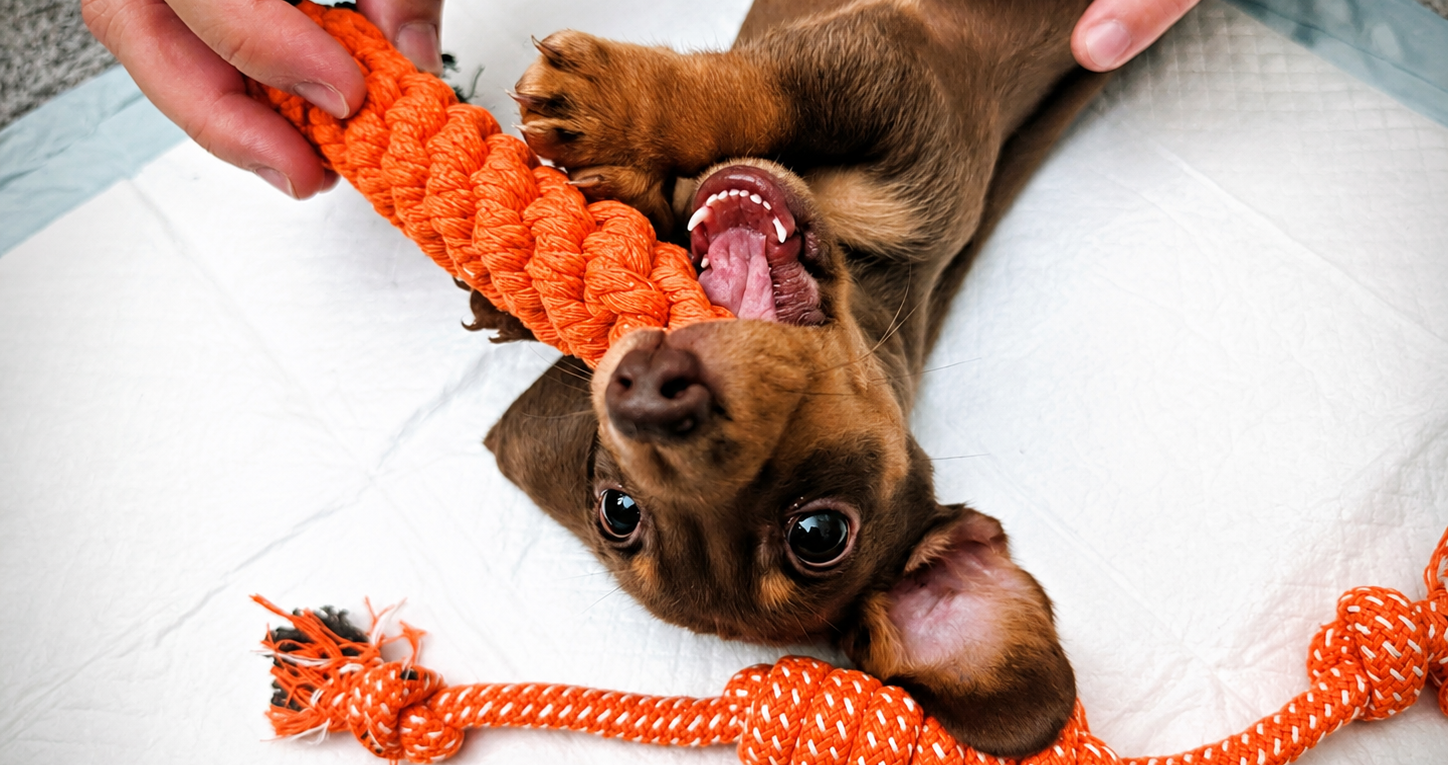
He knows he has playtime, like tug or ball, before dinner.
He does not have to guess what is happening every day.
And I strongly believe that helps keep him calm and happy.
Some people might see routine as boring.
For Winston, it has been reassuring.
Predictable does not mean dull.
It means safe.
And for a puppy learning how the world works, safe is a very good thing.
16. Separation Training Needs to Start Slowly
Dachshunds can be prone to separation anxiety, so this was something we took seriously from day one.
The best thing we learnt was using a high-value item when we left.
We would give Winston something special, leave for a tiny amount of time, then come back and take it away.
At first, we only left for about 10 seconds.
Just into another room.
Then we slowly increased the time.
Then the distance.
Then upstairs.
Then the hallway.
Then out the front door.
The key was using the puppy camera to watch how he reacted.
If he became unsettled, we stepped back and made it easier.
We also tried not to return while he was actively crying or barking, because we did not want him to learn that panic made us come back.
Instead, the goal was to reward calm behaviour with our return.
We also used the phrase “see you later.”
He knows what it means now.
It is like he looks at us and thinks, “Okay, I will rest now and you will be back.”
That took time.
A new puppy does not instinctively know you are coming back.
You have to teach them.
Gently.
Gradually.
Consistently.
17. The Puppy Camera Helped Him and Us
The puppy camera was not just for Winston.
It helped us too.
In the early days, it stopped us constantly rushing in because we thought we had heard something.
Later, it helped with separation training.
And when we went back to work after our month off, it gave us huge reassurance.
That was probably the hardest moment for us — leaving him after being with him so intensely for those first weeks.
We were so worried about how he would cope.
And then the camera showed us that actually, he was fine.
He would sleep until one of us came back at lunch, then settle again until we finished work and came home.
That was a big moment.
It helped us realise that the work we had put in was paying off.
18. We Are Glad We Took Back Care Seriously from Day One
Before Winston came home, we had already done a lot of research into dachshund backs.
Ramps.
Baby gates.
How to handle him properly.
Avoiding stairs.
Avoiding jumping.
Setting sofa boundaries.
We felt confident about that side of things, and looking back, I am really glad we were.
Some people did not understand why we were so careful.
Some still do not at first.
But friends and family who have had dachshunds completely get it.
And when people do ask, we are always happy to explain.
Usually, once you explain the dachshund back issue properly, people understand.
For us, back care was never about being dramatic.
It was about knowing the breed we had chosen and making the house work for him.
19. Puppy-Proofing Is Not Optional
We are very lucky that Winston has never been destructive with furniture.
He has never torn up the house.
He did briefly chew the corners of skirting boards when he was left alone for longer after we went back to work, and he occasionally bit the sofa when overtired, but nothing major.
Still, puppy-proofing mattered.
We used guards to block things like the TV cabinet, mainly so he could not decide my Nintendo Switch looked tasty.
We used baby gates to control where he could go.
We introduced parts of the house gradually.
We had hard floors downstairs, which we had chosen when buying the house because we knew we wanted a dog one day. Those floors made toilet accidents easier to clean, and we could place washable mats where needed for grip and comfort.
For dachshunds especially, I think your home setup matters.
They are tiny.
Curious.
Determined.
And built in a way that means you have to think carefully about stairs, jumping and slipping.
20. Insurance Was One of the Best Decisions We Made
We insured Winston straight away with Petplan.
And I am very glad we did.
He is part of the family.
We have home insurance and life insurance, so to us, it made sense that he should be properly covered too.
As a puppy, Winston had issues with his teeth that needed vet attention. He was also poorly with vomiting and diarrhoea, which became costly.
Insurance helped.
And, of course, with dachshunds there is always the worry of IVDD.
That is not something we wanted to ignore.
IVDD treatment, surgery and rehabilitation can be very expensive, and we wanted to know that if Winston ever needed serious care, we could make decisions based on what was best for him, not just what we could afford in the moment.
That peace of mind mattered to us.
21. Boring Admin Is Actually Important
This is not the exciting part of puppy life, but it is useful.
We would recommend keeping track of:
- vaccinations
- flea treatment
- worming treatment
- insurance details
- vet appointments
- weight
- food amounts
- any tummy issues
- any medication
- training progress
A simple calendar or notes app is enough.
It does not need to be fancy.
But when you are tired, trying to remember dates and doses in your head is not ideal.
Puppies already take up enough brain space.
22. Some Things Are Not Worth Panicking About
There are things that feel terrifying in the moment but are often just normal puppy life.
One for us was puppy teeth.
When playing tug, Winston once had two teeth suddenly come out.
I was mortified.
He did not even react.
Not even slightly.
Puppy biting and mouthing can also feel intense in the early months, but they are teething, learning and exploring.
That does not mean you ignore it.
You still redirect, train and set boundaries.
But you also do not need to panic that your puppy is broken.
It passes.
Eventually.
Ice cubes, frozen Kongs and frozen carrot sticks in moderation all helped Winston when he was teething.
23. Some Things Are Worth Taking Seriously
While some things are normal puppy chaos, there are other things I would take seriously from the beginning.
For dachshunds, especially:
- separation anxiety
- reactivity
- obsessive barking
- jumping
- stairs
- weight
- lack of routine
- lack of mental stimulation
Winston has never been a big barker.
He mostly barks if he really needs something, like going out or wanting a toy, or when he is playing.
But when he was very young and had found his tiny little bark, he would sometimes get overtired, run into his crate, burrow under his bed and bark like he was in a badger tunnel.
It was pretty funny.
And very cute.
But we still did not react to it.
If he barked at us, we turned away and only gave attention again once he was quiet.
That was something we had planned to do from the beginning, and I am glad we stuck to it.
Cute behaviour can still become annoying behaviour if you accidentally reward it.
24. The Bond Can Be Immediate and Still Feel Overwhelming
We felt bonded to Winston before he even came home.
The first time we met him, he was only about four weeks old.
He was in a litter of two, there with his sister, and he was about the size of my hand.
When we sat down, his sister stayed still, but Winston made this tiny effort to crawl over to us.
We held him.
He licked our fingers.
He was calm and relaxed.
And honestly, that was it.
He was ours.
So when he came home and things felt hard, it was not because we did not love him.
We loved him completely.
We were just overwhelmed.
That is something I wish more people said.
You can love your puppy and still find the first few weeks incredibly hard.
You can feel lucky and exhausted.
Grateful and tearful.
Completely in love and briefly wonder what on earth you have done.
Those things can all be true at the same time.
25. The Lovely Moments Make It Worth It
The loveliest early moments were often the simplest.
Winston climbing onto our laps purely to fall asleep.
Tiny sleepy cuddles.
Watching him understand something new.
Seeing him choose his crate.
Seeing him look to us for guidance.
Seeing him become more confident.
At around two months in, I think we started to feel like we could breathe a bit more.
We had adjusted.
He had settled.
We had learnt him.
And we fully realised just how much we loved this little sausage.
The beginning had felt huge.
But then suddenly, he was just part of us.
What We Would Tell New Dachshund Puppy Owners
If you are about to bring home your first dachshund puppy, this is what I would say.
Prepare for cuteness.
Prepare for love.
Prepare for chaos.
Prepare for your routine to be completely turned upside down.
But prepare mainly for research, patience and training.
Dachshunds are not just small dogs.
They are clever, stubborn, funny, loving little dogs with big personalities and specific needs.
Take their backs seriously.
Take separation training seriously.
Take socialisation seriously.
Take routine seriously.
Do not panic over normal puppy biting, teething and silly puppy behaviour.
But do not assume they will just grow into a calm, well-mannered dog without your help either.
They need guidance.
They need consistency.
They need sleep.
They need mental stimulation.
They need boundaries.
They need reassurance.
And they need you to keep showing up, even when you are tired.
Especially when you are tired.
Final Thoughts
There is no way to be perfectly prepared for a dachshund puppy.
You can buy the things.
Read the guides.
Set up the crate.
Choose the food.
Block the stairs.
Plan the routine.
And still find yourself standing in the garden in the rain, holding an umbrella over a tiny sausage dog, wondering how something so small has completely taken over your life.
But it does get easier.
The exhausting stage does not last forever.
The toilet trips slow down.
The biting improves.
The routine settles.
The training starts to show.
And one day, you realise that the tiny puppy who turned your life upside down has become the little dog you cannot imagine being without.
Winston may be small, but his personality is massive.
And as hard as those early weeks were, we would do it all again.
In a heartbeat.
At Dax & Hound Co., everything we share comes from real life with Winston and the things we are still learning as dachshund owners. We are not trainers or vets — just two people who love one very determined little dachshund and hope our honest experience helps someone else feel a little more prepared.
Leave a Reply